 गुलाब
गुलाब

Sawflies
Tenthredinidae
किडा


थोडक्यात
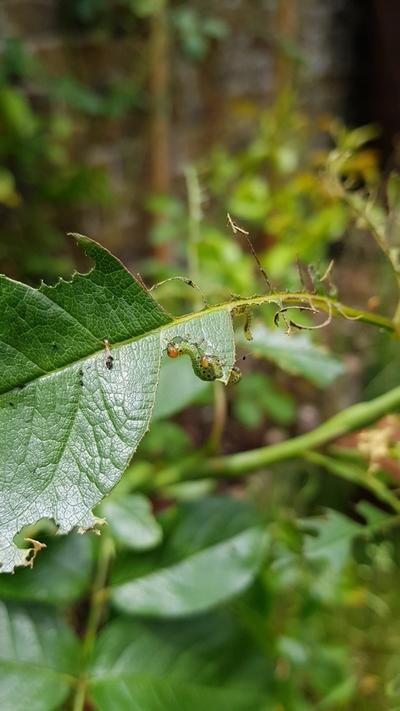
- Feeding damage on rose leaves.
- Leaves become papery, translucent, dry-out, curled and shrivelled.
- Defoliation and weakening of the plant.
- Small, yellow-green slug-like larvae.
मध्ये देखील मिळू शकते
गुलाब
लक्षणे
Initial signs are small, translucent patches on the leaf surface, leaving only veins and a thin, papery layer. As feeding continues, damaged areas expand, dry out, turn brown, and cause the leaf to curl and shrivel. Severe infestations can consume entire leaves and defoliate the plant. While light attacks usually don't harm established roses, repeated or heavy attacks significantly weaken the plant, increasing vulnerability to secondary stresses like other pests and fungal diseases.
शिफारशी

जैविक नियंत्रण
Several low-toxicity, organically acceptable products can also be used directly against the larvae: Insecticidal soap kills young larvae on contact; ensure thorough coverage of both leaf surfaces. Neem oil disrupts larval feeding and development; apply in the early morning or evening to avoid harming pollinators. Spinosad absorbed into the leaf tissue and disrupts the larval nervous system upon feeding; effective but can adversely affect bees and some beneficial insects, so apply with care. Natural enemies, including insectivorous birds, parasitic wasps, predaceous beetles, fungal and viral diseases, and small mammals keep many sawfly populations low and can cause outbreak populations to decline. Supporting these natural enemies is the most sustainable long-term strategy.

रासायनिक नियंत्रण
Always consider an integrated approach with preventive and biological measures first. Chemical pesticides can harm the natural enemies of sawflies and should only be applied when an infestation reaches a critical threshold and other methods have proved insufficient. If treatment is needed, choose targeted, low-toxicity products over broad-spectrum insecticides.
कशामुळे झाले
The damage is caused by the larvae of sawflies in the family Tenthredinidae, which feed on the soft tissue of rose leaves. Adult sawflies use a saw-like appendage to cut slits into the undersides of leaves, where they lay their eggs. After hatching, the larvae feed on the foliage for approximately four weeks before dropping to the soil to pupate. Adults are stout, wasp-like insects, typically black or dark in colour with two pairs of wings. Depending on the species, one to three generations may be produced per year, with the most damaging feeding activity typically occurring in late spring and early summer.
प्रतिबंधक उपाय
- Inspect both leaf surfaces regularly, especially in spring, to catch infestations early.
- Remove and destroy infested leaves or manually pick off larvae when numbers are small.
- Knock larvae off plants with a strong jet of water; they have difficulty climbing back up.
- Avoid excessive nitrogen fertilisation.
- Encourage natural enemies by planting nectar-rich companion plants near roses to attract parasitic wasps and predatory insects.
सामायिक करा


More problems onगुलाब
प्लँटिक्स डाऊनलोड करा
