 Mijo
Mijo

Chafer Beetle
Chiloloba acuta
Insecto


Resumen
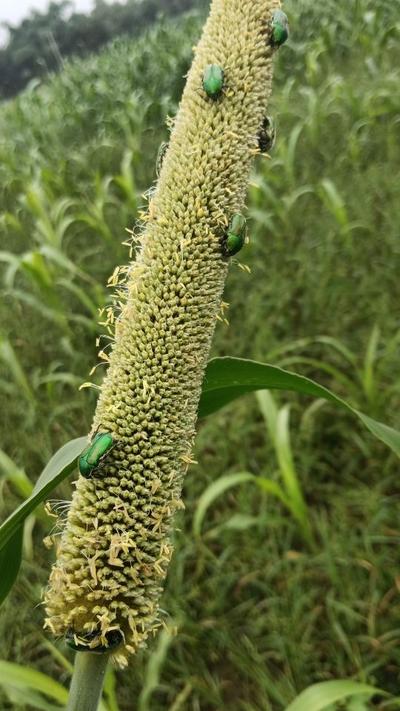
- Green metallic beetles found feeding on flowers of cereals.
- Damage to flowers compromises grain formation.
- The frass produced may discolour the blossoms.
- They may also attack buds and leaves if needed.


Mijo
Síntomas
In Southern India, the metallic green beetle Chiloloba acuta is normally found on grasses after the northeast monsoon. However, it will occasionally also feed on pearl millet, maize and sorghum, mainly searching for pollen (thereby its other common name, pollen beetle). While feeding, it may damage flowers, compromising grain formations. The frass produced may discolour the blossoms. While they are considered pollen- and flower-feeders, they may also attack buds and leaves if needed. Larvae are found on loose, decaying organic matter and are not considered a pest.
Recomendaciones

Control orgánico
Old larvae of the Chafer beetle are highly sensitive to moderate to high doses of pathogenic nematodes of Heterorhabditis bacteriophora and some Steinernema species (S. siamkayai, S. thermophilum and S. abbasi). Some species of fungi, for example Metarhizium anisopliae, could also be an effective control agent in managing the grubs. Find out if products based on these nematodes are available in your area. Soil treatments with Neem cake can also deter the grubs from feeding and reduce the size of grubs.

Tratamiento químico
Always consider an integrated approach with preventive measures and biological treatments if available. Insecticides could be used to target adults.
Qué lo causó
Damage is caused by the Chafer beetle, Chiloloba acuta, an insect that is widely distributed in the Indian subcontinent. Adults are generally shiny metallic green, but some specimen have red or deep blue variations. They are irregularly covered with tufts of hairs, more conspicuous on the sides and underside of the body. Females lay creamy white eggs singly in the subsoil, leaves or rotten wood. Larvae are C-shaped and feed on organic matter in the soil (trunks, branches or twigs). Adults are commonly seen on grasses in southern India after the northeast monsoon. They will occasionally also feed on pearl millet, maize and sorghum, damaging flowers and grain.
Medidas preventivas
- Monitor the field regularly for signs of the Chafer beetles or damage on flowers.
- Collect beetles with sweep nets if available.
Compartir


More problems onMijo
Descargar Plantix
