 Girasol

Sunflower mosaic virus
Potyvirus helitessellati
Virus


Resumen
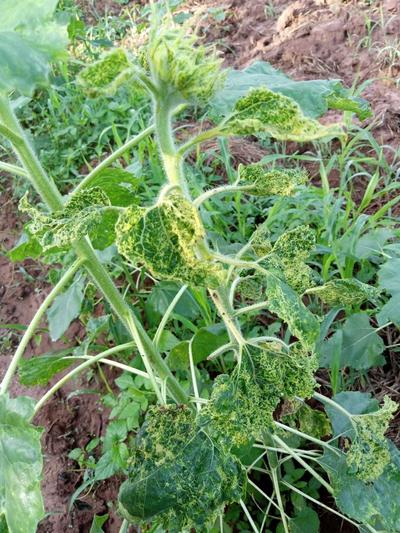
- Yellow and green patches on leaves (mosaic pattern). Small yellow spots on leaf surfaces. Plants become shorter and weaker. Sunflower heads develop poorly with fewer seeds.
También se puede encontrar en
Girasol
Síntomas
Initially, light and dark green patches appear on leaves (mosaic pattern). Small bright yellow spots develop on leaf surfaces. Symptoms first show on younger leaves at top of plant. Advanced signs will appear after 3+ weeks. Plants remain shorter than healthy sunflowers. Sunflower heads are smaller and poorly developed. Fewer seeds form, and they may be smaller. In severe cases, leaves turn brown and fall off.
Recomendaciones

Control orgánico
There is no biological treatment of this viral disease. Combine biological controls focusing on aphids with good farming practices for long-term virus prevention.

Tratamiento químico
No chemicals can cure infected plants. Control focuses on preventing infection by controlling aphids. Apply insecticides when aphids first appear, before virus spreads. Spray both top and bottom of leaves where aphids hide. Don't spray on windy days or before rain. Rotate insecticide types to prevent resistance. Always wear protective clothing and follow label directions.
Qué lo causó
Sunflower Mosaic Virus is caused by Potyvirus helitessellati and is affecting all sunflower varieties worldwide, including wild varieties. Infected seeds can spread virus to new plantings. Green peach aphids carry virus from infected to healthy plants. The virus spreads quickly during warm weather when aphids are most active. The virus can also be spread throughout the field by workers which can carry the virus on hands, clothing or contaminated farm tools and equipment.
Medidas preventivas
- Buy certified virus-free seeds from trusted suppliers. Disinfect all farming equipment. Clear wild sunflowers and zinnia plants from around field. Plant when aphid numbers are low (avoid peak season). Check plants weekly for early symptoms and aphids. Remove infected plants immediately - burn or bury them. Keep field free of weeds that harbour viruses. Wash hands and disinfect tools after handling plants. Rotate crops - don't plant sunflowers in same field for 2-3 years. Keep new plantings away from infected areas. Use silver plastic mulch to confuse aphids.
Compartir


More problems onGirasol
Descargar Plantix
