 TARO
TARO

Taro Leaf Blight
Phytophthora colocasiae
Hongo


Resumen
- Small brown spots with halos.
- Spots grow into large blotches.
- Orange or reddish liquid bleeds from infected spots.
- Can destroy whole leaves.
- Spreads rapidly in wet, warm weather.
- Attacks leaves, stems, and corms causing rot after harvest.
También se puede encontrar en
TARO
Síntomas
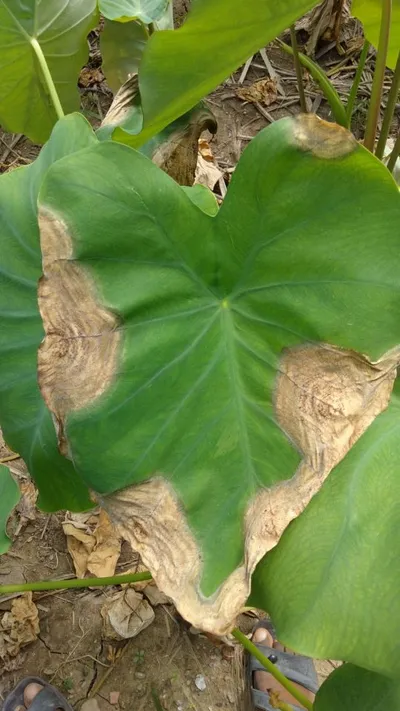
The first signs are small brown spots with water-soaked edges and light yellow halos around them. These spots appear where water collects on leaves. They start small but grow very fast into big round brown patches that can cover more than half the leaf. One special sign of this disease is the bright orange or reddish-brown liquid that bleeds from infected spots. This liquid is easy to see on the bottom of leaves. During the day, this liquid dries and becomes hard and dark brown. As spots grow bigger, they destroy whole leaves. Leaves may also show shot-holes surrounded by white powdery rings. The leaf stems (petioles) get dark lesions with reddish-brown colour. When the disease reaches the underground corms, they turn brown and firm but rot quickly after you harvest them.
Recomendaciones

Control orgánico
Trichoderma species have shown to be the most promising biological control agents. Dip cormels in Trichoderma slurry before planting. Prepare plant extracts at 10-20 mg/ml concentration. Apply as preventive sprays before disease appears. Treat planting material with biocontrol agents before planting. Combine different biological agents for better results.

Tratamiento químico
Chemical control is often not practical for taro leaf blight. Frequent rains wash off fungicides quickly, making repeated applications expensive and less effective. Resistant varieties are more reliable than chemical sprays. Apply regional approved fungicides preventively before disease symptoms appear. Start spraying when weather conditions favour disease development. Reapply after every heavy rain if possible. Focus on covering leaf undersides where infection starts. Use high volume sprays for good coverage. Consider cost-effectiveness - may not be economical for small farms.
Qué lo causó
Taro Leaf Blight is caused by Phytophthora colocasiae, a water mould that thrives in wet conditions. This pathogen spreads from plant to plant through rain splash and wind-blown rain. The tiny spores land on leaves and stems where they germinate quickly in wet conditions. In flooded taro fields, the disease spreads even faster through the paddy water that carries spores to healthy plants. The disease loves rainy and warm weather. It spreads fastest when humidity stays over 90% and temperatures reach up to 30°C. The pathogen can survive in plant tissue and soil, making it hard to get rid of once it enters the field. It can also live in infected corms during the off-season and start new infections when you plant them. Besides taro, it also attacks dasheen and some other related plants that can serve as sources of infection. Taro Leaf Blight is the most destructive disease of taro worldwide.
Medidas preventivas
- Use disease-free planting material and resistant varieties when available.
- Improve field drainage to reduce standing water.
- Plant in fields that have never had taro leaf blight before. Avoid planting downwind from infected fields.
- Plant with wider spacing between plants to slow disease spread.
- Check your field twice a week during early growing stages.
- Cut off diseased plant parts and remove them in bags.
- Harvest when leaves are completely dry to avoid spreading spores.
- Remove all plant debris from field after harvest.
- Rotate crops with non-host plants for at least 2 years.
Compartir


Descargar Plantix
