 SESAME

Phyllody
Candidatus Phytoplasma
Other


In a Nutshell
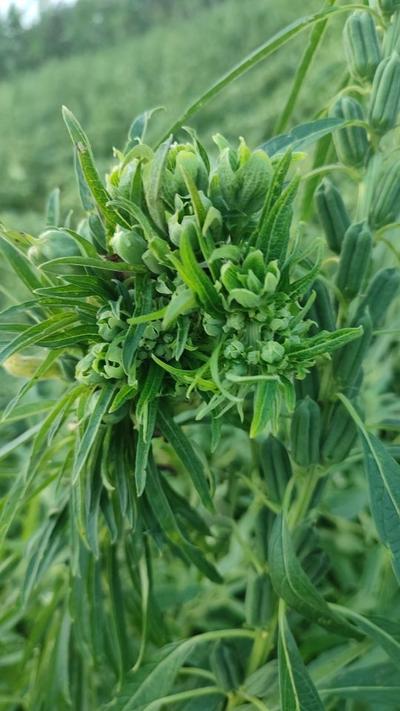
- Flowers turn into green leafy structures. Plants become bushy. Flowers produce no seeds. Possible severe yield loss. Spread by leafhoppers during humid, rainy weather.
Can also be found in
SESAME
Symptoms
Instead of normal flowers that make seeds, the plant develops clusters of small green leaves. Plants become bushy and stunted with short spaces between leaves. The leaves stay small and the plant keeps making more shoots at the top. Any flowers that form stay sterile and cannot make seeds. Some plants may look like witches' broom with many thin shoots growing together.
Recommendations

Organic Control
There is no cure for phytoplasma diseases once plants are infected. Start with neem oil for early leafhopper control. Apply when first leafhoppers appear in field and repeat every 10-15 days during peak activity. Switch only to chemical insecticides when thresholds exceed limits. Check for locally available natural enemies (predatory or parasitic insects) that can control the pest.

Chemical Control
There is no cure for phytoplasma diseases once plants are infected. Chemical control focuses on preventing infection by killing leafhopper vectors before they can spread the disease. Apply first spray when leafhopper populations appear. Repeat spraying every 15 days during humid periods. Focus treatment on preventing vector population buildup. Monitor the weather and increase treatments before rainy seasons. Stop insecticide use once disease symptoms appear as it will be too late to act.
What caused it?
Phyllody disease is caused by phytoplasma - tiny bacteria-like organisms that live inside plant cells. These phytoplasmas cannot survive outside plants or move by themselves. They need leafhoppers to carry them from infected plants to healthy ones. High humidity (above 85%), heavy rainfall, and cool temperatures between 20-25°C create perfect conditions for both phytoplasma development and leafhopper activity. The phytoplasma takes 15-63 days to develop inside leafhoppers and 13-61 days to cause symptoms in sesame plants. Once a leafhopper picks up the phytoplasma, it can spread the disease for its entire life. Only adult leafhoppers can transmit the disease - young nymphs cannot spread it. Phyllody is one of the most destructive diseases of sesame worldwide. The name comes from the main symptom - flowers turning into green leafy structures called phylloids.
Preventive Measures
- Use resistant varieties. Use healthy, disease-free seeds from clean sources. Avoid planting during peak leafhopper activity periods. Intercrop sesame with pigeon pea in 6:1 ratio. Control leafhopper populations with regular monitoring. Maintain proper field drainage to reduce humidity. Remove and destroy infected plants immediately when spotted. Keep fields free of weeds that can host phytoplasma. Practice crop rotation with non-host crops.
Share


More problems onSESAME
Download Plantix
