 Rice
Rice

White tip nematode
Aphelenchoides besseyi
Other


In a Nutshell
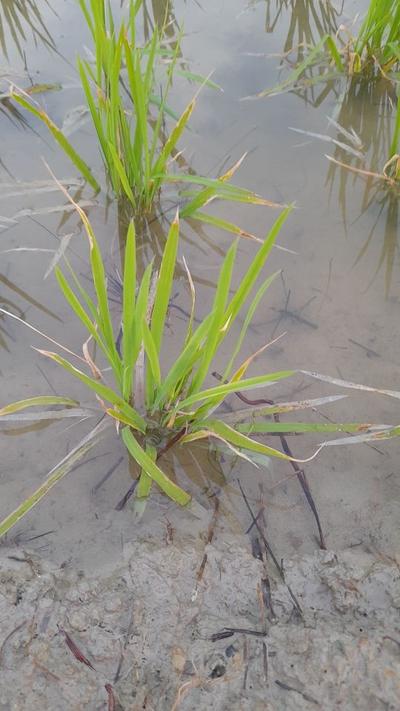
- Tips of the top leaves turn white, eventually dry up. New leaves appear twisted, crinkled, or folded. Stunted plants and weak-looking. Small grain heads with empty or distorted grains. Last leaf before the grain head is twisted, blocking it from coming out.
Can also be found in

Rice
Symptoms
The most obvious sign of this disease is the whitening of the top 3 to 5 centimetres of the leaves, which eventually turn brown and die. The young, developing leaves often become twisted or wrinkled as they grow. These symptoms usually appear most clearly from the middle of the growing season until the grain begins to develop. Affected plants are often shorter and lack the healthy green look of normal rice. As the plant matures, the grain heads appear smaller than normal, and many of the grains may be empty, shrivelled, or misshapen. In severe cases, the last leaf becomes so tightly twisted that the grain head cannot fully emerge from the stem.
Recommendations

Organic Control
Applying beneficial soil bacteria as a seed treatment can help protect the young plant by competing with the nematodes for space. Using "green manures," such as growing certain cover crops and tilling them into the soil, can also help lower nematode numbers by encouraging healthy soil life that naturally attacks the worms. Research has also shown that certain beneficial fungi can help reduce infection levels by targeting the nematodes in the soil or on the plant.

Chemical Control
Always consider an integrated approach with preventive measures together with biological treatments. General chemical management focuses on treating the seeds before planting to eliminate the nematodes while they are still inactive. Because these pests live deep inside the grain or are protected within the leaf folds during growth, sprays applied to the leaves are often less effective. If field treatments are used, they must be applied early in the plant's life to stop the pests from moving toward the developing grain heads. When using pesticides or chemicals, wear protective clothing, read label instructions, follow local regulations, and pay attention to proper recommendations when mixing products to ensure safety and effectiveness.
What caused it?
This disease is caused by microscopic worms called nematodes that primarily travel and survive inside rice seeds. These nematodes can survive by drying out and going into a deep sleep inside the stored grain for up to three years. When the seeds are planted and become wet, the nematodes wake up and become active. They move up the plant by swimming in a thin film of water on the plant surface, especially when the air is very humid. They live and feed on the outside of the young, tender plant tissues. As the plant matures, the nematodes move into the developing flowers and eventually settle inside the new seeds to repeat the cycle.
Preventive Measures
- Use certified, nematode-free seeds and choose resistant varieties if available. Treat seeds with hot water at 55°C to 61°C for 10 to 15 minutes before sowing. Plant early in the season to avoid peak nematode activity. Rotate rice with non-host crops like pulses for at least one year. Clean all farming equipment thoroughly when moving between fields. Deeply plough the field after harvest to bury old plant remains. Control weeds within and around the field that may act as alternative hosts. Scout the field regularly for white leaf tips and twisted growth.
Share


More problems onRice
Download Plantix
