 SESAME

Sesame Leafroller
Antigastra catalaunalis
Insect


In a Nutshell
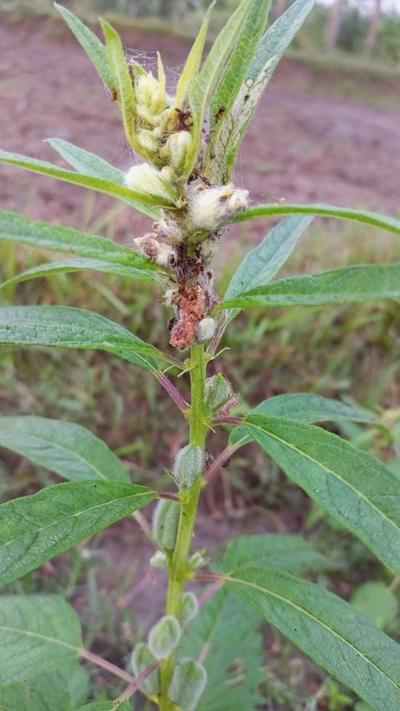
- Top leaves webbed.
- Leaves appear twisted, curled, and bound by fine silk threads.
- Caterpillars bore into the tender shoots and developing pods.
- Dark, sand-like droppings on the webbed leaves and near holes in pods.
- Withered tips and holes in the seeds.
Can also be found in
SESAME
Symptoms
In the early stages young caterpillars are webbing the top leaves together with fine silk. They live and feed inside these webbed clusters, making the leaves look twisted and distorted. As the caterpillars grow, they move from the leaves to the soft and tender growth at the tips of the shoots. They bore into these stems, causing the tips of the plant to wilt and dry up. Later in the season, they bore into the developing pods and eat the seeds inside. A clear sign of their presence is the dark, grain-like droppings (frass) found stuck to the webs or around the entry holes on the pods. In severe attacks, the entire top of the plant can become a tangled mass of silk and dead leaves.
Recommendations

Organic Control
Environmentally friendly options include using botanical extracts, such as Neem Seed Kernel Extract (NSKE) or neem oil, which act as a natural repellent and stop the caterpillars from feeding. You can also use sprays containing beneficial fungi like Beauveria bassiana or Metarhizium anisopliae, which naturally infect and kill the larvae. Encouraging natural enemies like spiders and predatory wasps is also helpful. Light traps can be set up in the field to catch adult moths at night, which helps to reduce the number of eggs laid on the crop.

Chemical Control
General chemical management focuses on reaching the young caterpillars before they have a chance to bore deep into the stems or pods. Once they are hidden inside the plant, it is much harder for treatments to work. It is most effective to apply treatments to the leaves as soon as you see the first silk webs appearing. Timing is very important; applications are often most successful when done in the early morning or late evening when the caterpillars are more likely to be active on the surface.
What caused it?
This pest is a small, brownish-orange moth that is most active at night. The female moth lays tiny, greenish eggs on the undersides of leaves, flower buds, and young pods. The caterpillars that hatch are pale green with small black spots. They are very active and will wriggle backwards and drop to the ground on a silk thread if they are disturbed. The pest thrives in warm weather, especially when there are dry spells followed by light rain. High levels of nitrogen in the soil can make the sesame plants more likely to be attacked by encouraging soft and tender plant growth that is easy for the young caterpillars to eat and bore into.
Preventive Measures
- Sow sesame early in the season to allow the plants to mature before the pest population grows.
- Use intercropping by planting sesame with other crops like pigeon pea or mung bean.
- Avoid using too much nitrogen fertiliser to prevent excessive, soft plant growth.
- Remove and destroy all infested plant parts and webbed leaves as soon as you see them.
- Collect and burn old crop remains after harvest to kill any resting caterpillars or pupae.
- Protect natural enemies like spiders and predatory wasps that eat the caterpillars.
- Scout the field once a week, focusing on the top leaves and flower buds for signs of webbing.
Share


More problems onSESAME
Download Plantix
