 LITCHI

Lychee Stink Bug
Tessaratoma papillosa
Insect


In a Nutshell
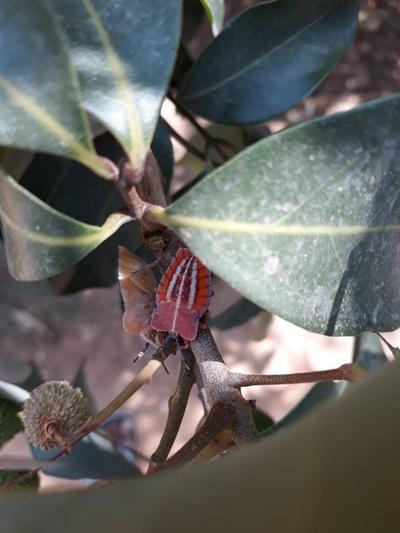
- Flowers and young fruits drop prematurely. Young twigs wither and turn black at the tips. Adult stink bug brownish-yellow colour with prominent red eyes. Bugs will spray a burning liquid when disturbed.
Can also be found in
LITCHI
Symptoms
Flower buds, shoots, flower spikes and young fruits can show symptoms. Young twigs and tender branches show signs of wilting, starting from the tips, which then turn black. The primary symptoms include the withering and shrinking of flowers and fruits. Fruits develop characteristic black patches or a blackening of the peel. These can prematurely drop consequently reducing fruit production of the tree. High pest population densities can result in stunted growth of branches and leaves. In severe infestations, overall tree growth can be stunted.
Recommendations

Organic Control
Natural enemies can help fight this pest. They will attack the eggs and prevent a bigger outbreak. Check in with local authorities or agricultural advisor to get a list of potential species.

Chemical Control
Apply through early flowering for best results. Use high-pressure, high-flow sprayers for thorough coverage. Target dense branches and leaves where bugs hide. Spray when bugs are less active (cooler temperatures). Multiple treatments may be needed for severe infestations. Local governments coordinate control programs.
What caused it?
Lychee Stink Bug (Tessaratoma papillosa) is an invasive pest native to Southeast Asia that has spread rapidly across Asia and is now establishing in new regions worldwide. Adult stink bugs have a distinctive shield shape with brownish-yellow coloration. The nymphs are particularly striking - bright red with white stripes running across their bodies. Egg masses are also characteristic, consisting of exactly 14 emerald green or pink eggs arranged in neat rows. Both adults and nymphs feed on the tender buds, shoots, flower spikes, and young fruit of litchi and longan trees using its piercing-sucking mouthparts. Their feeding wounds are inviting fungal diseases to cause further damage to the plant. Lychee Stink Bug causes distinctive damage to trees and poses serious risks to human health. When disturbed or threatened, they spray a corrosive, foul-smelling liquid that causes immediate burning sensations on skin contact and can lead to painful ulcers. Contact with eyes can result in blindness. If sprayed, wash the affected area immediately with fresh water and seek medical attention if severe irritation persists.
Preventive Measures
- Wear protective clothing when working near bugs. Apply sticky glue circles around tree trunk base to trap climbing bugs. Monitor trees weekly for eggs, nymphs, and adults. Cut off and collect plant leaves with eggs immediately. Remove infested branches. Knock branches to make bugs play dead and fall - collect with tools. Report new infestations to agricultural authorities.
Share


More problems onLITCHI
Download Plantix
