 JACKFRUIT

Jackfruit borer
Glyphodes caesalis
Insect


In a Nutshell
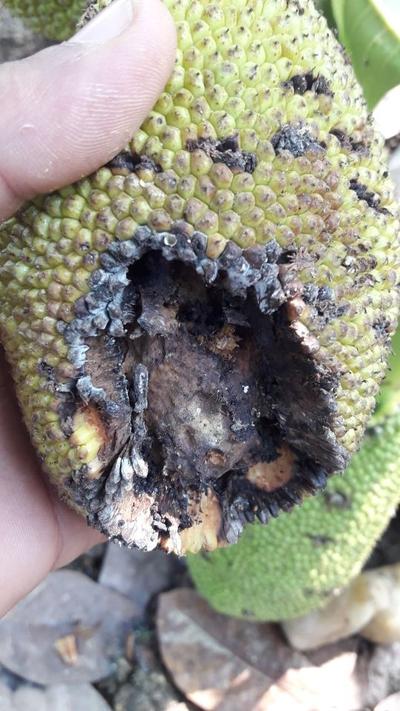
- Shoots and fruits feeding holes with piles of brown frass. Flowers and young fruits drop off trees early. Shoots wilt and dry up. Fruits rot and become unfit for eating. Reddish brown caterpillars with black spots visible on plant.
Can also be found in
JACKFRUIT
Symptoms
The caterpillar attacks the tip of tender shoots of mature tree and leads to its wilting. When larvae bore into growing tips and shoots it will lead to wilting, drying, stunted growth, zigzag stems, and lateral branching. Floral spikes are fed on internally which results in them not flowering and rotting. Early infestation causes fruit deformation or immature fruit drop. Later infestation involves boring into mature fruit, damaging the edible pulp. The feeding damage is a source for secondary infestation which leads to fruit rotting.
Recommendations

Organic Control
Monitor pest levels to decide when to spray. Combine fruit bagging with biological sprays. Target egg and early larval stages for best results. Use chemicals only when biological methods are not enough

Chemical Control
Spray at first sign of attack on shoots or fruits. Repeat spraying every 15 days during growing season. Focus spray on tender shoots, flower buds, and young fruits. Apply early morning or evening to avoid heat damage. Use good spreader-sticker to improve coverage. Always wear protective clothing during spraying.
What caused it?
The jackfruit shoot and fruit borer (Diaphania caesalis) is a major pest of jackfruit, especially in humid tropical regions. The fruit borer causes significant damage to jackfruit, impacting the crop from the flower bud stage up to fruit ripening. The reddish-brown caterpillar with black spots bores into tender shoots, flower spikes, and developing fruits, causing significant damage. The adult moth is pale brown with dark brown spots and orange stripes. Females lay eggs on tender shoots and flower buds, and the larvae burrow upon hatching. Larval activity is higher during flowering and fruiting. The feeding damage is a source for secondary infestation due to rain water and microorganisms. This damage reduces the market value of the fruit and saplings.
Preventive Measures
- Check trees weekly for holes, waste piles, and wilting shoots. Cut off attacked shoots, buds, and fruits immediately. Burn or bury all removed plant parts completely. Cover young fruits with polythene bags to stop egg laying. Use light traps to catch adult moths. Clean borer holes and fill with them with cotton wool and mud paste. Prune trees to improve air flow and reduce humidity. Remove all fallen fruits and plant debris from ground.
Share


More problems onJACKFRUIT
Download Plantix
