 TEA
TEA

Mosquito Bugs
Helopeltis sp.
Insect


In a Nutshell
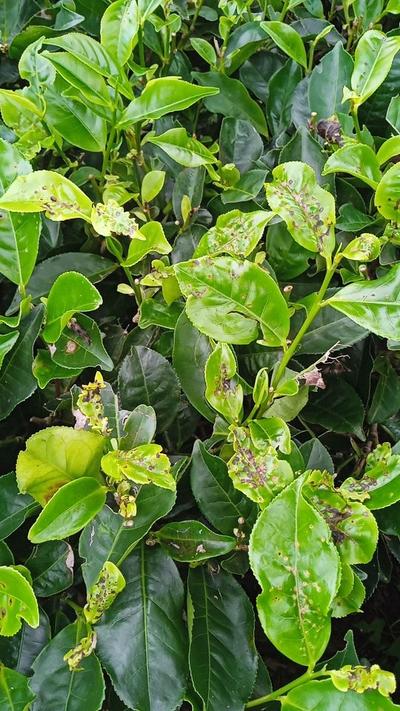
- Small dark brown spots on young leaves and shoots. Leaves turn black and curl. Young shoots dry up and die back. Warty surface and corky scab on the fruit surfaces. Red, black & white bugs with black wings.
Can also be found in


TEA
Symptoms
On Guava symptoms appear as rusty spots and black blisters on fruit surfaces. Resin exudes from feeding punctures. Leaves and shoots turn brown. Shedding of fruits may occur on the extensive infestation. On Tea symptoms will occur on the most valuable part - the young flushes. Small dark brown spots appear on the youngest leaves and tender shoots. These spots leak moisture from the center when fresh and turn black as they dry. The damaged tissue around each spot dies and turns darker with time. Leaves curl up becoming twisted and deformed. The growing tissue is damaged which stops new flush development. In bad attacks, whole green shoots dry up and die back. Branch canker can develop on severely damaged plants.
Recommendations

Organic Control
Combine cultural practices with biological control. Apply neem products first, chemicals only if needed. Time interventions with weather forecasts for maximum effect. Check for locally available natural enemies which can help minimise the pest population.

Chemical Control
Always consider an integrated approach with preventive measures together with biological treatments, if available. Rotate between chemical classes to prevent resistance. Use selective insecticides that preserve natural enemies. Spray every 2 weeks from the time of flowering to minimise damages. Apply in evening hours when bugs are most active. Target shaded center areas of bushes where bugs hide. Stop spraying 7-10 days before harvest for residue safety.
What caused it?
Mosquito Bugs are small insects about 1.5 cm long with mixed colour of red, black and white with black wings and antennae. Female bugs lay around 500 sausage-shaped eggs into the tissues of green shoots, buds and leaves. The emerging nymphs look like ants hairy, amber-coloured. The adults and nymphs both suck plant sap from tender buds, young leaves, soft stems and fruits. They prefer shaded areas with high humidity and are most active during early morning and late afternoon. Young shoots and fruits fail to grow properly and your harvest suffers. Their visual similarity to mosquitoes gave the insect their name.
Preventive Measures
- Check your plants regularly during pest favoured periods. Put up yellow sticky traps (16-20 per hectare). Remove and destroy all damaged plant parts. Practice regular pruning to improve air circulation. Keep weeds cleared around. Monitor weather - expect attacks during humid periods. Collect and destroy all fallen leaves and debris. Bag fruits in high-density planting systems to prevent infestation.
Share


More problems onCoffee
Download Plantix
