 LITCHI

Lychee Erinose Mite
Aceria litchii
Mite


In a Nutshell
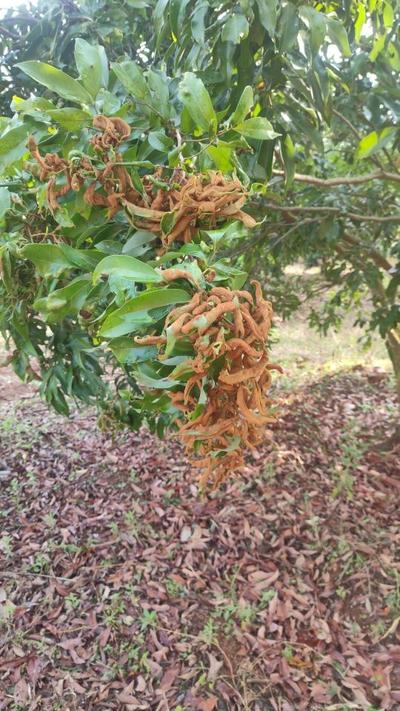
- Fuzzy, curled, and deformed leaves. Brown velvety growth on leaf surfaces. Small pits, developing into galls. Curled up leaves eventually dry out. Microscopic mites inside hairy growths.
Can also be found in
LITCHI
Symptoms
Young trees and new growth are most vulnerable to this insect. Early signs of infestation will show up in the form of small blisters form on young leaves and shoots. Silvery-white coloured hairs appear in blisters (erinea). Tiny whitish mites are barely visible on leaf undersides. As the infestation progresses the blisters turn reddish-brown and become thick and velvety. The leaves become severely distorted and curled. Small pits develop into hard protective galls. Infected leaves dry up and fall off the tree. Symptoms may also appear on petioles, stems, and flower buds.
Recommendations

Organic Control
Combine biological control with cultural practices. Use targeted chemical treatments only when necessary. Beneficial insects can help fight the mite infestation. Maintain a diverse plant habitat around lychee orchards. Use selective acaricides that don't harm natural enemies. Monitor beneficial mite populations regularly.

Chemical Control
Spray when first infestation is identified. Repeat applications every 15 days until new growth hardens. Focus spray on undersides of leaves where mites hide. Use ground equipment for thorough coverage - not aerial spraying. Always wear protective clothing and follow label instructions.
What caused it?
The symptoms are caused by Lychee Erinose Mite (Eriophyes litchii), a microscopic mite that feeds by sucking plant sap. Wind carries mites from infected to healthy trees. The mites can also be transported by tools, farm equipment as well as workers and infected plant material moving between trees. Young lychee trees (under 3 years old) are most vulnerable to mite infestations. Since mites prefer new growth also mature trees can be affected when they have new flush growth with soft, immature leaves and shoots.
Preventive Measures
- Maintain proper tree spacing for good air flow. Prune trees to improve air circulation and reduce humidity. Monitor trees weekly to catch infestations early. Avoid excessive nitrogen fertilisation that promotes soft growth. Remove and burn all affected leaves and twigs immediately. Avoid moving plant material from infected areas. Clean and sanitise tools between trees. Change clothes after working with infested trees. Apply preventive treatments before new growth appears.
Share


More problems onLITCHI
Download Plantix
