 Coconut

Coconut Mite
Aceria guerreronis
Mite


In a Nutshell
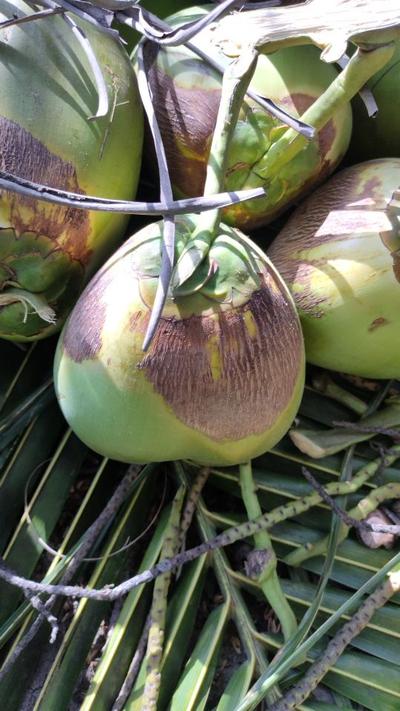
- Pale yellow or white triangular patches appear near the cap of young nuts. These patches turn brown or black and develop deep, rough cracks. Attacked nuts often become small, distorted, and lose their shape. Young fruits may fall off the tree before they are ready to harvest. The quality of the coconut meat and the husk fibre is greatly reduced.
Can also be found in
Coconut
Symptoms
The first signs of attack are small, pale yellow or white triangular patches that appear on very young fruits, right under the protective cap. As the fruits grow, these patches turn brown or black and the skin becomes rough and corky with deep, long cracks. Because the mites feed on specific spots, the nut grows unevenly, making it look small or misshapen. In many cases, young fruits may fall off the tree early. When harvested, the nuts yield much less meat, and the fibre inside the husk is often damaged and difficult to use.
Recommendations

Organic Control
Options include using helpful predatory mites that naturally hunt and eat the pest mites under the fruit caps. Certain types of beneficial fungi can also be applied; these grow on the mites and kill them naturally. Natural oils, such as those made from neem or garlic, can be sprayed on the developing fruit bunches to act as a repellent and slow down the mite's ability to feed. These methods are most effective when started as soon as the first fruits begin to form.

Chemical Control
Always consider an integrated approach with preventive measures together with biological/environment friendly treatments. Controlling these mites with liquids is a challenge because they stay hidden in the narrow gaps under the fruit cap. For any treatment to work, it must be directed into the "crown" of the tree and specifically onto the youngest fruit bunches. It is best to act early in the season to stop the population from growing. Using a variety of different management methods is better than relying on just one, as it helps prevent the mites from becoming harder to manage over time.
What caused it?
This problem is caused by tiny, carrot-shaped mites that are too small to see without a microscope. They live in large colonies hidden under the cap of the coconut fruit, where they suck juices from the soft, tender tissue. These mites have a very fast lifecycle, producing a new generation every 7 to 10 days, which allows their numbers to increase quickly. They are easily spread between trees by the wind or transported via insects and birds. While they are present all year, they tend to cause the most damage during dry periods or times of high humidity.
Preventive Measures
- Choose and plant coconut varieties or hybrids naturally resistant to mites. Give trees balanced nutrients, making sure they get enough nitrogen, phosphorus, and potassium. Add soil supplements like borax or gypsum to strengthen the tree's natural defences. Keep the trees well-watered, especially in dry seasons, to reduce plant stress. Remove and destroy all fallen "buttons" and small fruits.
- This gets rid of the mites' hiding spots. Plant tall trees or windbreaks around the plantation to block the wind that carries the mites. Grow cover crops like sun hemp.
- This improves the soil and supports helpful insects. Regularly check the youngest fruit bunches at the top of the tree for early signs of yellowing.
Share


More problems onCoconut
Download Plantix
