 Rose
Rose

Rust of Rose
Phragmidium sp.
Fungus


In a Nutshell
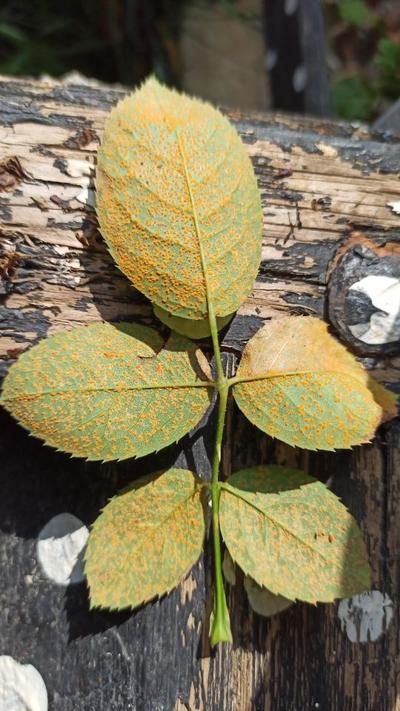
- Orange powdery spots on leaf undersides with yellow spots above.
- Lower leaves turn yellow and die off starting from bottom.
- Rose stems can become curled and distorted.
- Spreads rapidly in wet weather and mild temperatures.
Can also be found in
Rose
Symptoms
The first signs appear on lower leaves that start turning yellow. These leaves will eventually die and fall off. As the infection spreads upward, more leaves become affected and the rose bush loses its vigour and is not able to produce flowers. The most prominent symptoms are small, round, powdery spots called pustules. These pustules are bright orange or rust-coloured and appear on the underside of leaves. Above these pustules on the upper leaf surface, one will see yellow spots. The pustules contain thousands of fungal spores that spread the disease. As the disease progresses, pustules can also appear on rose stems and green flower parts. Rose stems may become curled and distorted. In severe cases, the entire plant becomes affected and significantly weakened.
Recommendations

Organic Control
Biological fungicides are only effective when applied preventively. One beneficial bacteria, namely Bacillus velezensis has been found to help reduce the fungal abundance. Apply during favourable weather

Chemical Control
Fungicides are only effective when applied before symptoms appear or at the very first sign of infection. Once orange pustules are visible, chemical control becomes much less effective. Begin preventive treatments early in the season before symptoms appear. Apply every 7-10 days during favourable conditions for disease outbreak. Alternate between different fungicide groups to prevent resistance. Focus coverage on leaf undersides where the fungus develops. Time applications during transition from wet to dry weather.
What caused it?
Rose rust is caused by several fungal species in the genus Phragmidium. These fungi only infect roses and their close relatives. The fungus needs living rose tissue to survive and complete its life cycle. The disease spreads through spores contained in the orange pustules. These spores are carried by wind or spread by rain splashes that move them from infected leaves to healthy plants. The fungus thrives under mild temperatures and wet conditions with high humidity. Spring and fall weather often provides perfect conditions for rust development. Spores can survive in plant debris on the ground, starting new infections the following season. The disease affects many different rose varieties, though some are more susceptible than others.
Preventive Measures
- Choose rust-resistant rose varieties.
- Only plant disease-free roses from trusted sources.
- Space plants properly so bushes don't touch and have good air circulation.
- Monitor your plants regularly.
- Prune roses to promote good airflow through the plant.
- Disinfect pruning tools between plants.
- Water at the base of plants - avoid overhead sprinklers.
- Never work on roses when leaves are wet.
- Remove and destroy affected plant parts immediately.
- Clean up all fallen leaves and plant debris after flowering season.
- Maintain good garden hygiene throughout the growing season.
Share


More problems onRose
Download Plantix
