 DURIAN

Leaf Web Blight and Dieback
Rhizoctonia solani
Fungus


In a Nutshell
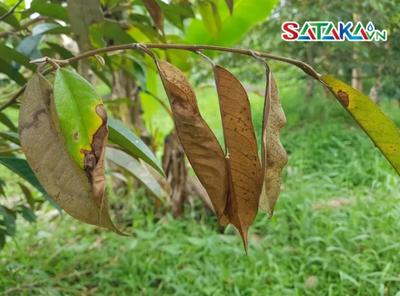
- Water-soaked brown spots appear on leaves and expand quickly. Leaves often stick together. Infected leaves turn yellow, dry up, and eventually fall off. The tips of young shoots and branches dry out and die. The disease spreads rapidly during the rainy season.
Can also be found in
DURIAN
Symptoms
The disease starts as small, water-soaked brown spots on the leaves. These spots grow larger and move along the length of the leaf, often starting from the tips or edges. You will see pale yellow or brown fungal threads spreading across the leaf surface. These threads act like glue, causing infected leaves to stick together in clusters. As the infection gets worse, the leaves turn yellow, then brown, and eventually dry out and die. On young trees, the very tips of the shoots can appear "burnt" and fall off. In mature trees, the loss of young leaves can lead to the tips of branches drying out, which can stop the tree from producing a good crop.
Recommendations

Organic Control
Environmentally friendly options include using helpful microbes like beneficial fungi (such as Trichoderma species) or bacteria (such as Bacillus subtilis). These "good" microbes can be sprayed on the leaves or applied to the soil to compete with the disease-causing fungus for space and food. They can also naturally attack the fungus to stop it from growing. These biological treatments work best when used early in the season as part of a regular plan to keep the trees and soil healthy.

Chemical Control
General chemical management focuses on protecting the leaves before the rainy season begins or at the very first sign of infection. Treatments should be applied as a shield to the leaves and young branches to stop the fungus from spreading. Because the fungus lives in the soil and on residues, it is important to target the areas where the infection starts.To prevent the fungus from developing resistance to control measures over time, it is beneficial to employ a variety of management methods throughout the year.
What caused it?
This disease is caused by a fungus that lives in the soil and on old plant remains. It spreads when raindrops splash the fungus from the ground or old leaves onto new, healthy leaves. The fungus thrives in warm temperatures and very high humidity, making the rainy season the most dangerous time for the orchard. It also spreads through direct contact when leaves touch each other in a thick, crowded canopy. High soil nitrogen levels encourage the growth of soft and tender plant tissues. This type of growth is easier for the fungus to penetrate, making the tree more susceptible to attack. If the orchard is not well-pruned or has poor drainage, the damp air trapped inside helps the fungus grow even faster.
Preventive Measures
- Space trees properly when planting to prevent the leaves from touching too much. Ensure the field has a good drainage system to prevent water from sitting on the ground. Provide trees with balanced nutrition and avoid using too much nitrogen fertiliser. Use mulch around the base of the tree to prevent the fungus from splashing up from the soil. Prune the tree canopy regularly to improve air movement and help leaves dry quickly. Clean all pruning tools with a disinfectant before moving from one tree to another. Scout the orchard frequently during the rainy season for early signs of brown spots or stuck leaves. Remove and burn all infected branches and fallen leaves to get rid of the fungus.
Share


More problems onDURIAN
Download Plantix
