 DURIAN

Phomopsis Leaf Spot
Phomopsis durionis
Fungus


In a Nutshell
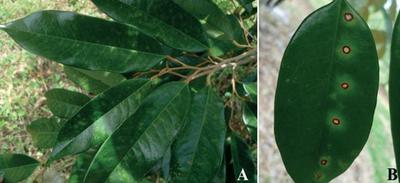
- Small, circular, reddish-brown spots on leaves. Spots grow larger and often with yellow ring around the edge. The centre of older spots turns greyish-white. Tiny black specks appear in the middle of the dead patches. Heavy infection causes leaves to turn yellow and fall off early.
Can also be found in
DURIAN
Symptoms
The disease starts as tiny, round, reddish-brown spots on the leaves. As these spots grow, they often develop a thin yellow ring around the outer edge. In older spots, the centre turns a light grey or white colour and becomes thin like paper. If you look very closely at these grey areas, you will see tiny black dots, which are the parts of the fungus where new spores are made. When many spots appear on a single leaf, they can merge together to cover large areas. This causes the leaf to turn yellow, dry out, and drop from the tree before it should. This loss of leaves can make the tree weak and reduce the amount of fruit it produces.
Recommendations

Organic Control
Environmentally friendly options include using helpful microbes like beneficial fungi or bacteria that compete with the leaf spot fungus. These can be sprayed on the leaves to create a biological barrier. Natural extracts, such as those made from neem, may also help slow down the growth of the fungus. These biological treatments work best when started early in the season or when weather conditions first become favourable for the disease.

Chemical Control
Sprays should be applied as a shield before the disease has a chance to spread widely across the tree. Because the fungus produces many spores, it is important to time the applications to cover the most vulnerable growth stages. Using a variety of different management tools helps to keep the fungus from becoming resistant to control over time.
What caused it?
This disease is caused by a fungus that lives on infected leaves and old plant residues. It spreads when raindrops splash the spores from the ground or old leaves onto new, healthy growth. The fungus thrives in warm weather and very high humidity, especially during the rainy season. It enters the leaf through tiny natural openings or small wounds. High levels of nitrogen that lead to soft and tender plant growth can make the tree more likely to be attacked. Once it starts, the fungus produces new spores in the black specks on the leaves, which the wind and rain then carry to other trees in the orchard.
Preventive Measures
- Select and plant durian varieties that are known to be less likely to get leaf spot. Space trees properly to allow for good air movement between the branches. Prune the canopy to keep it open, which helps the leaves dry more quickly after rain. Remove and burn all fallen leaves and infected branches to get rid of the fungus. Avoid overhead irrigation, as wet leaves help the spores spread and grow. Manage fertilisation carefully to avoid creating too much soft, weak growth. Clean pruning tools with a disinfectant before moving from one tree to another. Scout the orchard regularly, especially during the rainy season, for the first signs of brown spots.
Share


More problems onDURIAN
Download Plantix
