 JACKFRUIT

Soft rot of Jackfruit
Rhizopus artocarpi
Fungus


In a Nutshell
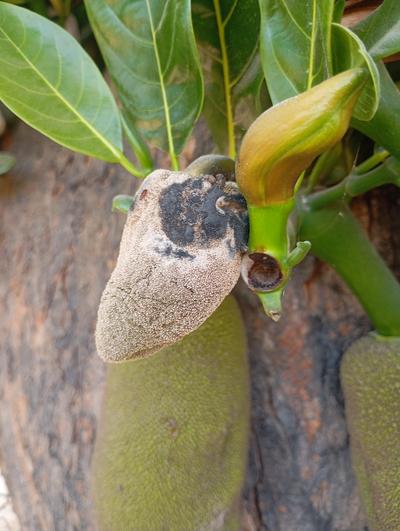
- Soft, watery, brown spots appear on flowers and fruits. A grey, furry mould quickly covers the affected area.
Can also be found in
JACKFRUIT
Symptoms
Soft, watery, brown spots appear on flowers and young fruit. A grey-brown, furry mould rapidly covers the rotting area. It turns black as dark masses develop on the fruit surface. Fruit shrivels, rots, and may fall from the tree before harvest.
Recommendations

Organic Control
Copper-based products such as Bordeaux mixture may offer some protection when applied preventively during flowering. Rhizobacteria such as Pseudomonas species and Trichoderma-based biocontrol products can help in suppressing the disease. Alternative options for control of soft rot in jackfruit are limited; prevention and good field hygiene are the foundation of management.

Chemical Control
Chemical control options are limited; no single product provides full control of soft rot in jackfruit.
What caused it?
The fungus is common in soil and on dying plant debris. It spreads easily through the air. Warm, humid, and rainy conditions strongly favour infection and spread. The disease can infect jackfruit even without a wound being present, unlike on other crops. Infections can begin at the stem end of the fruit after harvest. In storage, high temperature and poor ventilation accelerate disease development. And one infected fruit can spread the disease to surrounding fruit within a few days. Many other plants can act as hosts, including sweet potato, breadfruit, passionfruit, eggplant, and citrus.
Preventive Measures
- Prune trees to allow air circulation in the canopy.
- Check trees regularly during flowering and fruiting.
- Remove and destroy all infected fruit.
- Harvest fruit carefully and wash it in clean water; dry thoroughly before packing or storing.
- Do not pack or store fruit showing any signs of rot: destroy it immediately.
- Store fruit in a cool, well-ventilated place; temperatures below 10°C slow spore production significantly.
Share


More problems onJACKFRUIT
Download Plantix
