 CASTOR_BEAN

Fusarium Wilt of Castor bean
Fusarium oxysporum f. sp. ricini
Fungus


In a Nutshell
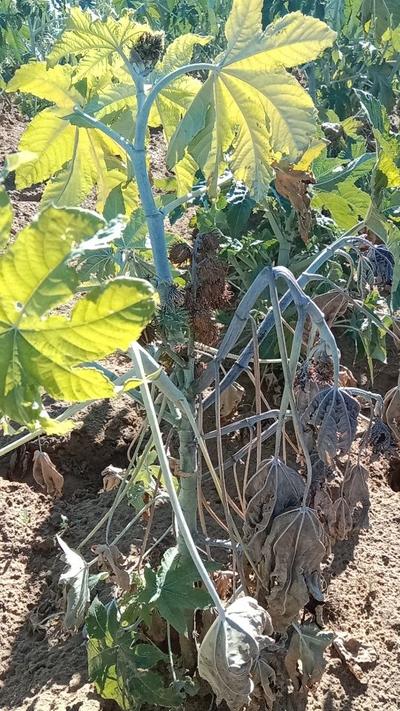
- Leaves wilt, yellow, and droop, starting at the bottom. Growth is stunted and plants are small. Stems show brown/black streaks when cut. Young seedlings may suddenly collapse and die. Wilting may start on one side of a leaf or the plant.
Can also be found in
CASTOR_BEAN
Symptoms
The disease can attack the plant at any stage, from young seedlings to fully grown castor beans. At first, the lower leaves droop and turn yellow. As the disease progresses, this yellowing moves up the plant, and the leaves eventually dry up and fall off. Sometimes, only one side of a leaf or one branch will wilt while the rest of the plant looks normal for a short time. If you pull up a sick plant and cut the stem or the main root open, you will see dark brown or black streaks inside. This is a sign that the tubes that carry water are blocked. In very young plants, the stem near the soil may shrivel, causing the seedling to fall over and die quickly.
Recommendations

Organic Control
Options include treating the seeds or the soil with helpful microbes like beneficial fungi or bacteria. These "good" microbes grow around the roots and act like a shield, making it harder for the disease-causing fungus to get in. Adding organic materials such as neem cake or mustard cake to the soil can also help by encouraging other helpful soil life that naturally fights the pathogen. These methods work best when used early, before the disease appears, as part of a general plan to keep the soil healthy.

Chemical Control
Always consider an integrated approach with preventive measures together with biological/environment friendly treatments. Managing this disease with chemicals is difficult because the fungus stays in the soil and lives deep inside the plant. Most management focuses on protecting the seeds before they are planted to stop the fungus from attacking the young roots as they grow. Once a plant shows signs of wilting in the field, sprays applied to the leaves will not cure the infection. It is important to focus on keeping the soil and seeds healthy to prevent the fungus from entering the plant in the first place.
What caused it?
This disease is caused by a fungus that lives in the soil and can survive there for many years, even when no castor plants are present. It survives as tough, sleeping spores in the dirt or on old plant residues. The fungus enters the plant through the roots, often using tiny wounds caused by growth or soil insects to get inside. Once inside, it grows into the plant structures that carry water and nutrients from the roots to the leaves. The fungus produces toxins and blocks these structures, which starves the plant of water. The disease spreads through infested soil, moving water, and contaminated seeds. It thrives in warm soil temperatures and is often more severe in fields where castor is grown year after year.
Preventive Measures
- Always use seeds from healthy plants or certified disease-free sources. Select and plant castor varieties that are known to be resistant to Fusarium wilt. Rotate castor with crops that are not affected, such as cereals or millets, for at least three years. Avoid planting in fields where the disease has been a problem in the past. Apply organic materials like manure or neem cake to the soil before planting. Remove and destroy infected plants as soon as you see symptoms to stop the fungus from spreading. Clean all farming tools, tractor tyres, and shoes thoroughly after working in an infected field. Ensure the field has good drainage to prevent water from sitting around the roots. Scout the field regularly, especially during warm weather, for early signs of wilting.
Share


More problems onCASTOR_BEAN
Download Plantix
