 Cacao
Cacao

Frosty Pod Rot
Moniliophthora roreri
Fungus


In a Nutshell
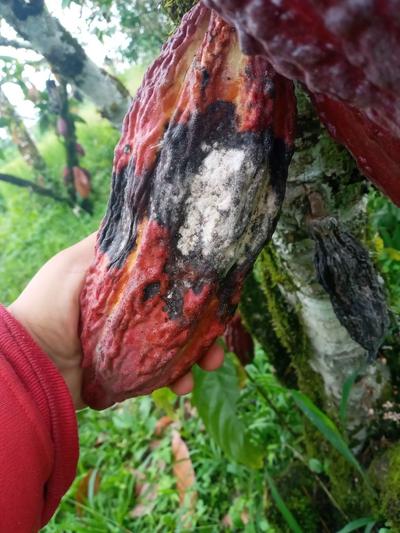
- Swollen pods with dark brown spots that spread quickly. White powdery coat appears on infected areas. Internal pod rot with reddish-brown colour. Infected pods become heavier than healthy ones. Eventually pods dry into hard black mummies.
Can also be found in
Cacao
Symptoms
Frosty pod rot affects cocoa pods at different stages, with symptoms changing as the pods grow older. The disease only attacks pods and fruits, never affecting leaves or branches. Young pods show swellings on the surface with slight yellowing. Pod interior becomes soft and watery. Growing pods experience more severe deformations and swelling with large brown spots appearing and spreading over the entire surface. The infected area will become covered in white powdery spores. Early ripening may occur and the pod rots inside, appearing reddish-brown. Mature pods become covered with irregular oily brown spots that merge together and also end up with a white powdery layer. The pods become noticeably heavier and eventually shrink, becoming hard black mummies.
Recommendations

Organic Control
Just like chemical fungicides biological control is most effective when applied before pods get infected. Some Trichoderma species have shown to good results keeping the fungus in check, when applied regularly and preventively.

Chemical Control
Chemical fungicides can help control the disease, but they are most effective when combines with good cultural practices. Prevention is always better and cheaper than trying to cure infected trees. Focus spray on pods, especially young ones. Spray during dry weather. Use motorised sprayers for better coverage.
What caused it?
Frosty pod rot is caused by the fungus Moniliophthora roreri. Young pods (0-3 months) are most susceptible, while mature pods (5-6 months) have better resistance. The fungal spores can be spread by wind and rain splashes, and favour high humidity, which makes the rainy season the main time for the disease spread. But also contaminated tools, clothing and moving already infected pods through the plantation will spread the spores. Poor air circulation in dense canopy are also favourable conditions for the disease.
Preventive Measures
- Use resistant cocoa varieties when available. Check plants weekly and remove infected pods immediately - focus on young pods. Bury diseased pods at least 50 cm deep or burn them. Never transport pods from infected areas. Prune trees twice yearly to improve air circulation. Remove crossing branches and water shoots. Keep tree canopy low (3-4 meters high). Improve drainage to reduce humidity. Regular weeding to eliminate disease hosts. Harvest ripe pods regularly - don't leave overripe fruit. Clean and disinfect tools.
Share


More problems onCacao
Download Plantix
