 Cacao
Cacao

Black Pods Disease
Phytophthora palmivora
Fungus


In a Nutshell
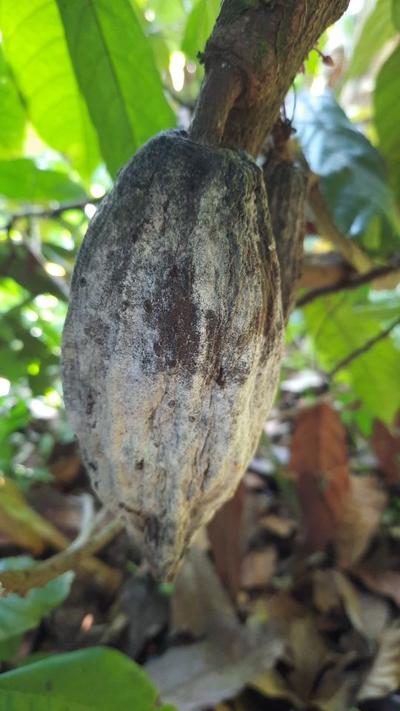
- Round brown spots on pods that expand rapidly. Infected pods turn black and mummified. White spores covering the pod. "Fishy" smell from infected pods. Attacks whole plant.
Can also be found in
Cacao
Symptoms
Round brown spots usually start on top or bottom of pod. Spots expand rapidly to cover entire pod in 1-2 weeks. In wet weather, sparse white spores appear on brown lesions. A strong 'fishy' smell develops from infected cocoa pods. They turn black, dry up, and become mummified but stay attached. Internal cocoa beans rot in young pods; older pods may have healthy beans. Young shoot experience rapid browning and can die-back completely. On the stems one can observe oval rusty-brown spots with bright pink to wine colour underneath the bark. Leaves may become discoloured along the leaf veins.The collar and trunk can show dark brown water-soaked lesions with reddish-brown gummy exudate.
Recommendations

Organic Control
Just like chemical fungicides biological control is most effective when applied before pods get infected. Some Trichoderma species have shown to good results keeping the fungus in check, when applied regularly and preventively.

Chemical Control
Chemical fungicides can help control the disease, but they are most effective when combines with good cultural practices. Prevention is always better and cheaper than trying to cure infected trees. Apply before wet season starts and during peak flowering to pod maturity. Spray every 3-4 weeks during rainy season. Use 6-8 applications per season for severe disease pressure. Apply high dose to trunk and main branches before wet season. Trunk injection once per season can be as effective as multiple sprays.
What caused it?
Black pod disease is caused by Phytophthora palmivora, a soil-borne pathogen that attacks the entire plant. This disease affects pods, stems, shoots, leaves, and roots of all ages. The fungal spores can be spread by wind and rain splashes, and favour high humidity, which makes the rainy season the main time for the disease spread. Direct contact between infected and healthy plant parts or contaminated soil and tools will lead to the spread of the disease.
Preventive Measures
- Choose well-drained planting sites to avoid waterlogged soil. Avoid planting in soil known to be infested with the fungus. Use disease-resistant or tolerant cocoa varieties when available. Improve drainage systems to prevent water accumulation. Plant trees with proper spacing (3.1 x 3.1 meters) for good air circulation. Prune trees to improve airflow and reduce humidity in canopy. Control weeds that can harbour the pathogen. Clean tools and boots when moving between infected and healthy areas. Harvest ripe pods regularly and remove all diseased pods immediately. Remove and destroy mummified pods and infected plant debris.
Share


More problems onCoconut
Download Plantix
