 Sunflower

Verticillium Wilt of Sunflower
Verticillium dahliae
Fungus


In a Nutshell
- Leaves turn yellow, from the lower part upward.
- Yellowing affects one side first.
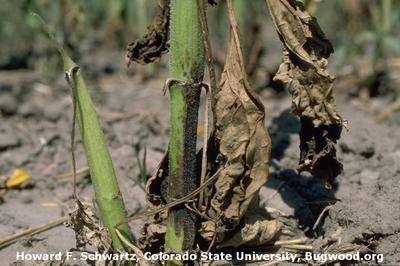
- Brown discolouration inside the stem when cut open.
- Stunted growth and premature death of the plant.
Can also be found in
Sunflower
Symptoms
Yellowing of leaves begins on the lower leaves. Symptoms often appear on one side of the plant or one half of a leaf. Infected plants wilt during the day, even when irrigated. Tiny dark spots may appear on and inside the stem as the plant matures. Severely infected plants mature and die earlier than healthy ones, reducing seed quality and yield.
Recommendations

Organic Control
No fully effective biological or organic control is currently available. Incorporating organic matter such as compost into the soil may support beneficial microbial activity that suppresses the pathogen. Solarisation: covering moist soil with plastic during hot periods can reduce fungal populations in the upper soil layer.

Chemical Control
Chemical control options for Verticillium wilt in sunflowers are very limited, as no fully effective fungicide is currently available once the plant is infected. Fungicide seed treatments applied before sowing may help. Apply treatments at sowing time, as foliar sprays have no effect on a soil-borne pathogen. Chemical control should always be used as a complement to prevention, never as a standalone solution.
What caused it?
It is caused by the soil-borne fungus Verticillium dahliae. The fungus survives in the soil, even without a host plant. It enters the plant through the roots and blocks water movement. It spreads through soil, equipment, plant debris, and seeds. The following factors favour the disease: cool soil temperatures (between 15°C and 25°C), high soil moisture early in the season followed by drier conditions and light soils with low organic matter.
Preventive Measures
- Use certified, disease-free seed and choose varieties with improved tolerance to Verticillium wilt.
- Rotate with non-host crops such as cereals for at least three to four years; avoid susceptible crops like potato, tomato, cotton, and strawberry.
- Remove and destroy all crop debris after harvest.
- Clean equipment thoroughly before moving it between fields.
- Improve field drainage to prevent waterlogging and avoid excessive nitrogen fertilisation.
- Control weeds within and around the field.
- Scout regularly, focusing on lower leaves and plants showing one-sided yellowing or wilting.
Share


More problems onSunflower
Download Plantix
