 Carottes

Blight of Carrot
Alternaria dauci
Champignon


En Bref
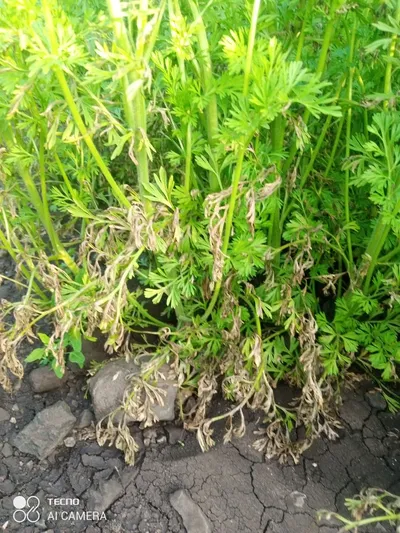
- Dark-brown to black spots on leaflet tips and margins.
- Leaves look scorched and blighted. Lower, older leaves affected first.
- Petioles can be girdled and killed, leaves collapse.
Peut aussi être retrouvé(e) dans
Carottes
Symptômes
The earliest signs of infection appear as small, irregular, dark-brown to black lesions on the margins and tips of the lower, older leaflets. These lesions can vary in size and may be surrounded by a yellow halo. Over time, the spots expand and coalesce, giving the leaf a blighted, burned appearance. Severely affected leaflets shrivel and die. In advanced stages, large lesions can also develop on the petioles, sometimes girdling them entirely and causing the leaves to break off. Occasionally, the pathogen infects young seedlings at or just below the soil line, resulting in damping-off. Diseased petioles are prone to breaking during mechanical harvest, which can cause roots to be left behind in the soil.
Recommandations

Contrôle Biologique
Treat the fungus preventively. Copper-based products have shown an effect on the disease and some studies also mention Trichoderma and Bacillus species to combat the fungus. As with all biological controls, efficacy may vary depending on the carrot variety and environmental conditions. Always consider combining biological treatments with cultural and preventive measures for best results.

Contrôle Chimique
Always consider an integrated approach with preventive measures together with biological treatments, if available. Fungicide applications should begin when the first symptoms are detected, or preventively in humid regions where the disease commonly occurs. Adequate canopy coverage becomes more difficult as the crop canopy closes, so early applications are more effective. Alternate between fungicide groups to reduce the risk of resistance development. Copper-based products can also be alternated with registered fungicides and have shown efficacy against Alternaria leaf blight, and may additionally help to suppress bacterial leaf blight.
Ce qui l'a provoqué(e)
The disease is caused by the fungus Alternaria dauci, which can be transmitted through infected or contaminated seeds and can overwinter on infested crop residues and volunteer carrot plants. The fungus cannot survive in the soil without living plant material. Fungal spores are dispersed by wind and splashed by rain or overhead irrigation to neighbouring plants, and can be carried long distances by wind and on farm equipment. Infection is favoured by moderate to warm temperatures (16-35°C) and prolonged periods of leaf wetness. Typically, only 8 to 12 hours of leaf wetness are required for spores to germinate and infect the plant. As temperature increases, the duration of wetness needed for infection decreases. Disease severity is generally higher on poorly fertilised, stressed plants.
Mesures préventives
- Use certified, disease-free seeds and resistant or tolerant varieties where available.
- Use wider plant spacing and raised ridges to improve air circulation and reduce leaf wetness duration.
- Avoid overhead irrigation; if unavoidable, water during the day so foliage dries quickly.
- Maintain adequate fertilisation.
- Harvest on time and immediately incorporate crop debris into the soil after harvest.
- Rotate with a different crops for a minimum of two years to reduce disease risk.
Partager


More problems onCarottes
Télécharger Plantix
