 TEA
TEA

Black Looper
Hyposidra talaca
حشرات


نظرة عامة
- Thin, see-through leaf damage.
- Feeding from outside towards centre of bush.
- Complete defoliation, making bushes look bare and burnt.
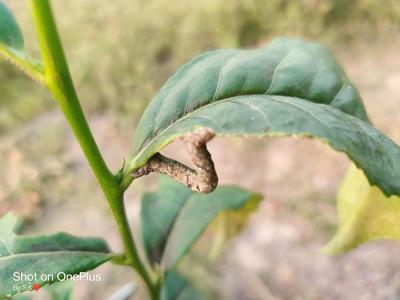
- Black larvae with white specs that appear like stripes.
كما يمكن العثور عليها في


TEA
الأعراض
First, the small larvae eat the soft part of the leaves, making them look like a thin, see-through layer. As they grow, the larvae eat whole leaves, starting from the outside and moving towards the center of the tea bush. If there are a lot of them, they can completely remove all the leaves from the tea bushes. This makes the bushes look bare and burnt. When the leaves are eaten repeatedly, the tea bush becomes weaker, the quality of the harvested tea is lower, and the plants are more easily attacked by other pests and diseases.
التوصيات

المكافحه العضوية
Several natural enemies of the black looper have been found and can be used in an Integrated Pest Management (IPM) plan. Parasitic wasps (e.g. Cotesia ruficrus) lay their eggs inside the looper. Its numbers are highest in late autumn and spring, which is when the looper population also grows. Predatory stink bugs (e.g. Eocanthecona furcellata) are eating the looper larvae and are active all season, but most common from June to September. These natural enemire can be grown in large numbers to be released in the fields. Also, a virus called Hyposidra talaca nucleopolyhedrovirus (HytaNPV) is a promising natural insecticide. Field tests showed that using 800–1000 ml per hectare greatly reduced the looper population. HytaNPV is considered a safe and effective replacement for chemical insecticides in an IPM program.

المكافحة الكيميائية
Always consider an integrated approach with preventive measures together with biological treatments if available. Management of the black looper has historically relied heavily on synthetic insecticides; however, resistance to multiple chemical classes is a serious and growing concern across major tea-growing regions. Rotate insecticide classes to slow the development of further resistance and always apply according to label directions.
سبب المرض
This damage is caused by the larvae of the black looper moth, Hyposidra talaca, also known as the black inch worm. The adult moth looks like a dry leaf, which helps it hide. Female moths lay large groups of eggs (about 250) under loose bark, moss, or on the roots of the shade trees in the tea plantation. They do not lay eggs directly on the tea plants. When the eggs hatch, the tiny black with white ring-forming spots larvae drop from the shade trees and start feeding on the tea leaves. This pest has many generations a year (6 to 8), which is why it is always present on the tea plants. Outbreaks are more likely when it is warm, when shade trees are present, and when too many synthetic insecticide sprays are used, which kills the pest's natural enemies. Climate change is also causing more frequent outbreaks in the tea-growing regions near the Himalayas.
اجراءات وقائية
- Monitor tea bushes and shade trees regularly for early signs of larval feeding or egg clutches on bark.
- Choose shade tree species carefully.
- Avoid very tall shade trees, as oviposition has been shown to increase with tree height.
- Implement an integrated pest management (IPM) approach combining cultural, mechanical, biological, and chemical methods.
- Minimise unnecessary use of broad-spectrum insecticides to preserve natural enemy populations in the plantation ecosystem.
مشاركة


More problems onالكاكاو
تحميل تطبيق بلانتيكس
